From Baku to New York: WUF13 stakeholders carry momentum into the New Urban Agenda’s midterm review
More than 58,000 participants from 176 countries – including civil society, local and regional governments, youth, academia, Indigenous Peoples and the private sector – took part in WUF13 to address a housing crisis now affecting an estimated 3.4 billion people worldwide. Of those affected, over 1 billion live in informal settlements and slums. Ten years after the New Urban Agenda was adopted at Habitat III in Quito, Ecuador, their conclusions are feeding directly into the High-level Meeting in New York, building on open consultations held in March and May 2026 that first invited stakeholders to help shape the Political Declaration.
“The second decade must be defined not by renewed ambition alone, but by accelerated implementation, stronger partnerships and measurable progress in people’s lives”, the Chair of WUF13's Ministerial Meeting on the New Urban Agenda told ministers gathered in Baku in May.
For the global urban community, WUF13 helped bring stakeholder experience into this review moment. Through consultations held before the Forum, discussions during the Ministerial Meeting on the New Urban Agenda, stakeholder assemblies and roundtables, and the adoption of the Baku Call to Action, partners from across sectors contributed perspectives on what is needed to accelerate implementation.
Bringing stakeholder voices into the global review
The Baku Call to Action, presented at the close of WUF13, captured priorities emerging from months of stakeholder engagement and six days of dialogue in Baku. Its 15 lines of action are organized around three axes – recognizing underlying rights and drivers, responding to direct manifestations, and transforming housing systems.
The document places strong emphasis on a human rights-based approach to housing, stronger protections against forced evictions, and climate-resilient housing systems.
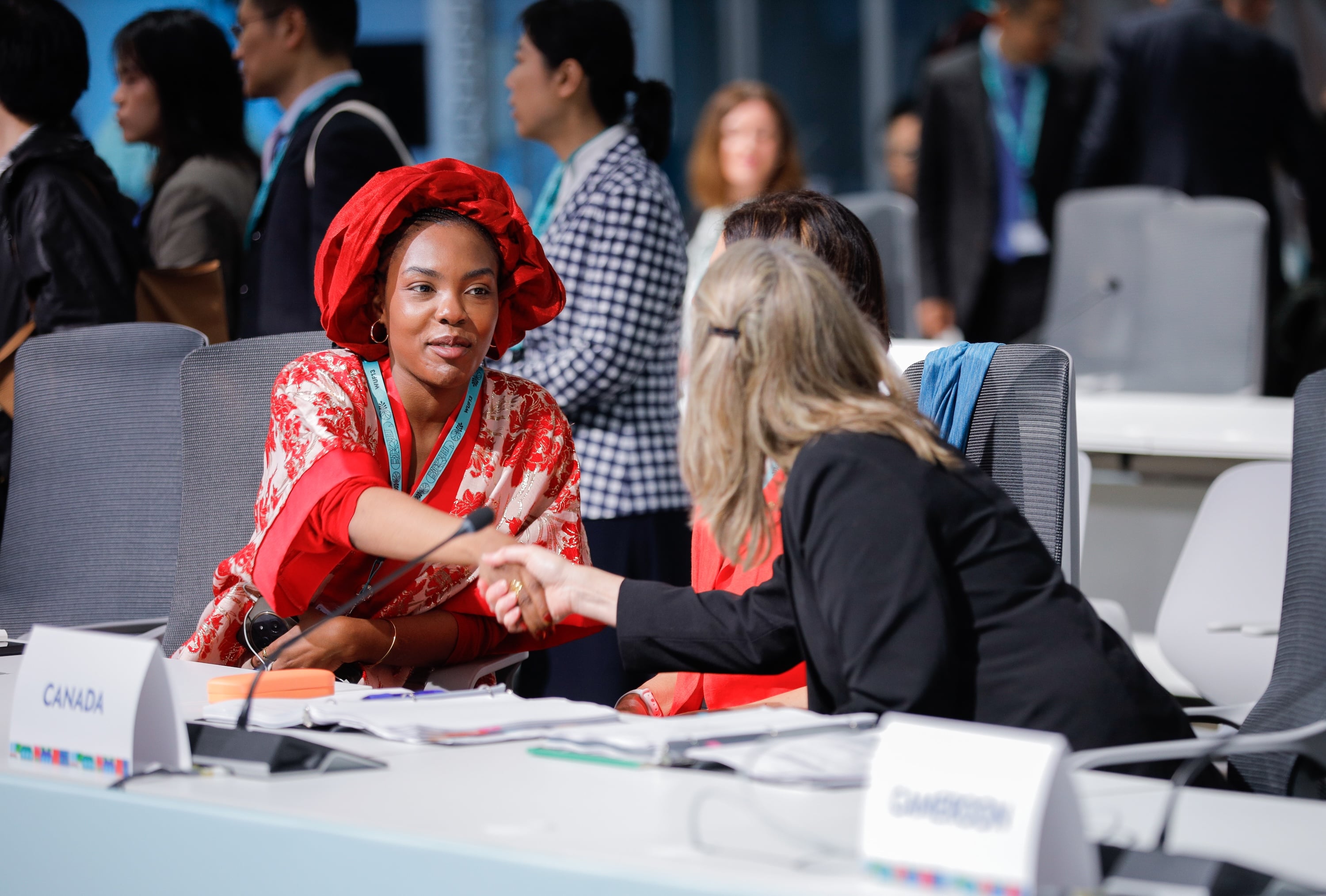
Its value lies not only in the priorities it sets out, but in the process behind it. Local governments, civil society, academia, youth, the private sector and other partners contributed to the discussions that shaped the document. Their inputs help connect global reviews with the realities of implementation: what cities and communities are facing, what solutions are emerging, and where stronger support is needed.
National experiences at the WUF13 Ministerial Meeting also helped assess progress against the New Urban Agenda’s three transformative commitments and found implementation to be uneven.
On social inclusion and ending poverty, they called for housing quality and strong communities, not just unit counts. They stressed that transforming and upgrading informal settlements and slums requires integrated, place-based approaches that bring together housing, infrastructure, poverty reduction and resilience. On urban prosperity and opportunities for all, they noted that housing's economic role “received less attention” than the other two commitments, despite its clear links to jobs and local economic development. On environmentally sustainable and resilient development, participants called the climate crisis “also a housing crisis”, noting that more than one billion people living in informal settlements are highly exposed to extreme weather and often lack access to basic services.
These stakeholder-led perspectives complement the intergovernmental discussions taking place in New York. While the Political Declaration of the High-Level Meeting reflects Member State commitments, the Baku Call to Action brings forward priorities from partners working across different levels and contexts.
Converging priorities
Although developed through different processes, the Baku Call to Action, the Chair’s Summary and the draft Political Declaration reflect many shared concerns.
They recognize that implementation of the New Urban Agenda remains uneven and that current progress is not sufficient to meet the scale of today’s urban challenges. They emphasize the need for stronger multilevel governance, increased investment in housing and slum upgrading, climate-responsive urban development, improved data and monitoring, and partnerships that can support action across levels of government and society.
This alignment matters as the New Urban Agenda enters its second decade. It shows a shared recognition that the next phase must move from promises to delivery, connecting global commitments with practical action on sustainable urban development and housing.
The WUF13 Ministerial Meeting concluded by noting that the task now is to carry this momentum “from Baku to New York, and from commitment to action” – a reminder that the path to inclusive, safe, resilient and sustainable cities and human settlements by 2036 runs through the people, institutions and communities responsible for implementing the New Urban Agenda.