How the worldview on informal settlements and slums shifted from ‘elimination’ to ‘transformation’
“Does it mean you don’t want to eliminate the slums?” a member of parliament asked her sceptically.
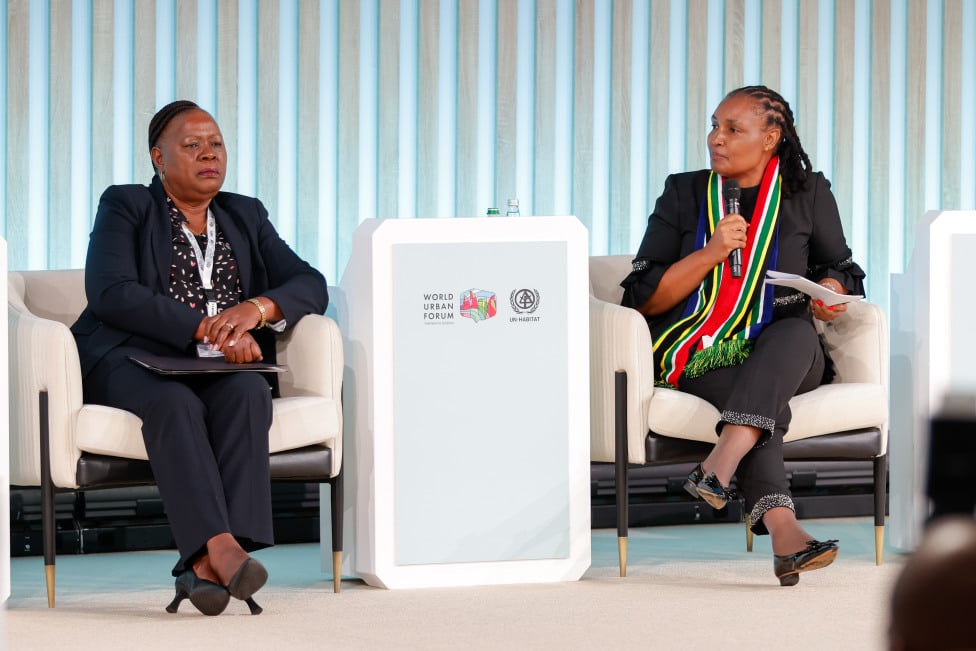
Standing today before participants at the thirteenth session of the World Urban Forum (WUF13), Alice Wahome explained how she made the case: “Slums already exist. If we start working on upgrading, then we have a strategy to eliminate.”
Wahome ultimately got the job. She has spent the last two years overseeing the country’s continent-leading effort, which has mobilized $350 million since 2011 to improve conditions for Kenya’s slum dwellers. It’s one small effort to chip away at an enormous global challenge: the estimated 1.1 billion people that live in informal settlements.
Importantly, that challenge is viewed differently today than it was a generation ago. “Informal settlements are not simply a problem to be eradicated,” said UN-Habitat Executive Director Anacláudia Rossbach. “They are a dominant mode of access to housing. They are one of the key avenues — in many cities the only way — billions of people can have a place to call home.”
That shift in mindset from problem to solution is gradually taking hold — though outdated perspectives linger, as evidenced by Wahome’s parliamentary interrogator.

Government takes the lead
While national governments have the resources and capacity to upgrade at scale, it is often a complex process. As Kenya has discovered, money alone is not the only necessary ingredient for improving informal settlements.
The government’s method when they first arrive in a slum community is to register residents and structure owners. Residents are often renters in precarious circumstances eager for stable housing who will willingly relocate temporarily with a government subsidy. Owners, by contrast, benefit financially as landlords and don’t want to see the status quo change. In the worst case, the owners may bankroll protests to gum up the works. It’s ultimately the government’s job to negotiate with these conflicting parties.
That work is slow, and explains in part why the global population of informal settlements continues to grow. South Africa, for example, has built almost 5 million houses but still has 4,000 informal settlements dotting the country.
“We may be progressing, but the need is growing,” said South African Minister of Human Settlements Thembisile Simelane.
NGOs: the bottom-up approach
At the other end of the spectrum from government lies the third sector, which may not be able to operate at scale but can be extremely effective given the sensitive nature of informal upgrading. The public sector may not even know who lives in a slum, how big it is, or where exactly its boundaries are. Community-led mapping can fill that gap and empower communities at risk of displacement.
“Maps are not just lines on paper,” said Renu Khosla, Director of the Centre for Urban and Regional Excellence, which has led such exercises in India. “They are the language of space. They reveal patterns, trends, connections.”
Some of the most successful examples have come from Thailand, where the Community Organizations Development Institute has upgraded living conditions for 15,000 households living informally along Bangkok’s canals. The NGO has helped these residents, frequently at risk of eviction, secure long-term leases and finance incremental improvements to their homes and public spaces. While the work can be outlined on a spreadsheet, the institute’s director Somsook Boonyabancha insists, “We build people, not units. Let the people be the actors — and the solution.”
Transformation
Back at the Kenyan parliament, the MP who questioned Wahome made a request: “Give us a better word.”
He might have meant that demand as a rhetorical challenge, but it’s one that WUF13 has answered. Even the term “upgrading” is starting to feel passé as the new language encourages the idea of “transformation” predicated on recognition, integration and finance at scale.
As Rossbach framed the new notion: “What is the difference between upgrading that advances the right to the city, and upgrading that produces displacement? That distinction must guide everything we do.”
The fresh terminology is an important step forward in the global journey to recasting the role of slums and informal settlements.
“Moving away from ‘eliminating’ or even ‘upgrading’ to ‘transforming’ informal settlements is an important new way of thinking,” said David Dodman, General Director of the Institute for Housing and Urban Development Studies at Erasmus University. “We talk in abstract terms about housing and informal settlements, and we can’t forget we’re talking about homes, neighborhoods and communities.”